



“Is a Bone Inlay Coffee Table Suitable for Everyday Use? Here’s the Honest Answer”
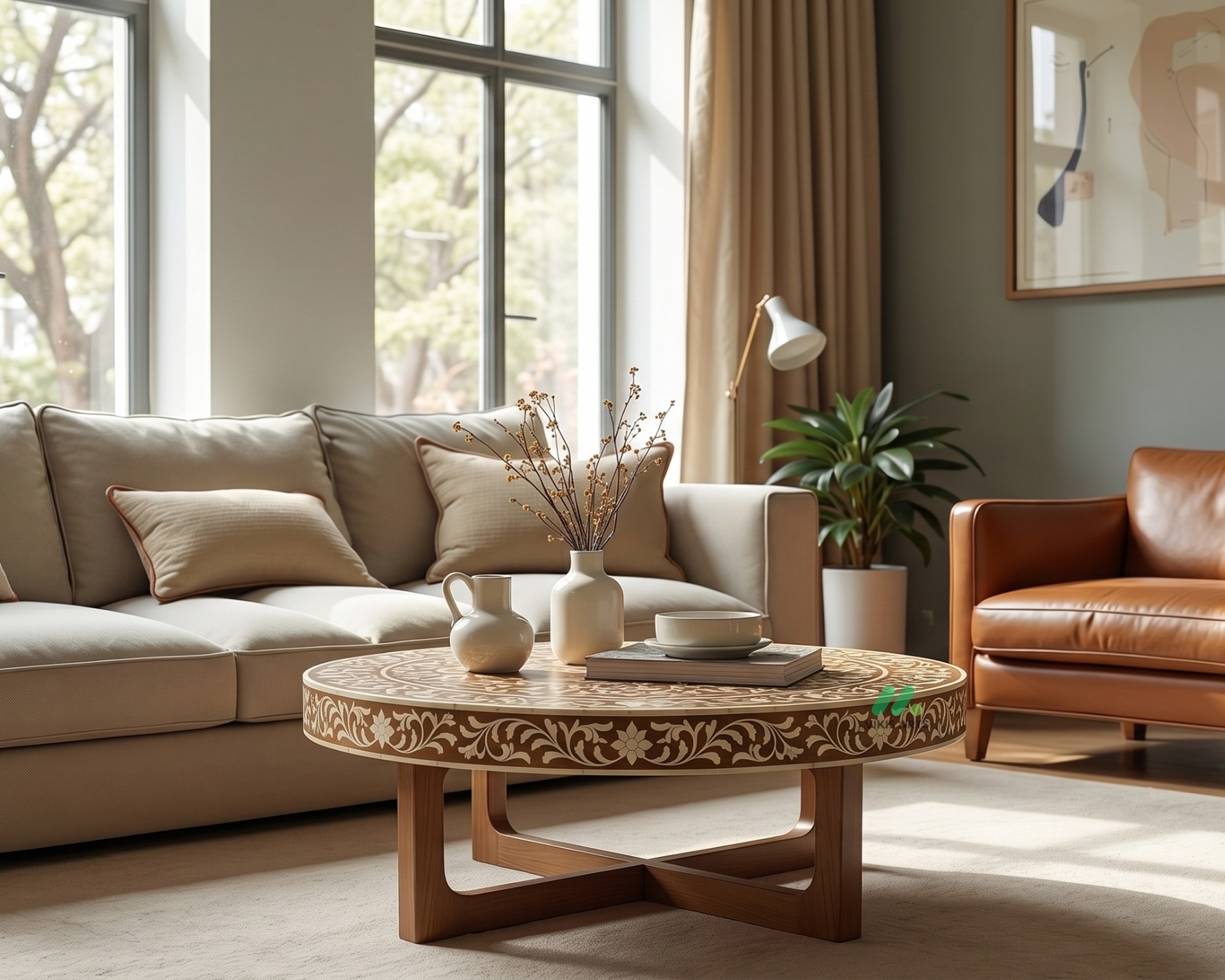
You’ve found “the one.” A bone inlay coffee table with a pattern so intricate it looks like it belongs in a gallery, not your living room. And then the doubt creeps in.
“It’s gorgeous… but is it actually practical? What happens when my coffee mug leaves a ring on it, or my dog decides the table is a launchpad?”
If you’ve been Googling this at midnight with a browser tab full of luxury furniture sites, you’re not alone. It’s one of the most common questions we hear — and the honest answer is more reassuring than you’d think.
What Exactly Is a Bone Inlay Coffee Table?
Before we get into durability, let’s quickly cover what you’re actually buying.
A bone inlay coffee table is built by hand-cutting tiny pieces of bone into intricate shapes, then embedding them one by one into a wooden base using resin. The whole surface is then sanded and polished until it’s smooth to the touch — no rough edges, no bumps, just a flawless pattern sitting flush with the wood.
It’s slow, painstaking work. A single table can take weeks. That’s part of why people assume it must be fragile — anything that takes that much care to make it feels like it should be handled with white gloves.
But that assumption isn’t quite right.
The Short Answer — Yes, With a Bit of Common Sense
A bone inlay coffee table is absolutely fine for everyday use. People put coffee mugs on them, prop their feet up, let kids do homework at them, and live with these tables for decades.
The catch? Like any quality furniture — think leather sofas, marble countertops, or solid wood dining tables — it rewards a little basic care and doesn’t love being neglected. Treat it the way you’d treat any nice piece of furniture, and it’ll outlast most of what’s in your house.
What Makes Bone Inlay Sturdier Than People Assume
The wood base does the heavy lifting
The bone pieces aren’t floating on their own — they’re set into a solid wood frame, usually mango wood or a similarly dense hardwood. That structure is what takes the actual weight and daily wear. The inlay is decorative armor on top of a genuinely sturdy skeleton.
Bone is tougher than it looks
Bone is dense and naturally resistant to everyday knocks — it’s not glass, and it’s not going to chip because someone set a book down a little too fast. What it doesn’t love is prolonged moisture and extreme heat, which we’ll get to below.
Know more about the Bone Inlay in detail read this Bone Inlay Furniture for Bedroom
Everyday Situations — How It Actually Holds Up
Let’s get specific, because “durable” means different things to different people.
Coffee mugs, remotes, and daily clutter
Totally fine. Setting down everyday items — mugs, phones, remotes, a stack of magazines — won’t damage the surface.If a hot mug does leave a mark or a piece ever comes loose, small fixes like a color-matched marker or a dab of wood glue can handle it easily.
Kids and pets in the house
Also fine, with a little awareness. The surface can take normal household activity. What it’s not built for is being dragged across the floor or repeatedly whacked with hard toys — but that’s true of any nice furniture, not something specific to bone inlay.
Feet up on the table (we’ve all done it)
Resting your feet on it occasionally? No problem. Standing on it or using it to support serious weight regularly isn’t a great idea — but that’s more a “don’t do this to any coffee table” rule than a bone-inlay-specific one.
The Few Things That Can Actually Damage It
To keep things honest, here’s what genuinely causes wear over time:
- Standing water or wet glasses left without a coaster — moisture can weaken the adhesive and warp the bone over time.
- Direct, constant sunlight — prolonged sun exposure can fade the natural bone or shell tones.
- Harsh chemical cleaners — these can damage both the inlay and the wooden base underneath.
- Dragging instead of lifting — moving it by pushing or sliding can stress the inlay and the joints beneath it
None of these are dealbreakers. They’re just things to be mindful of, the same way you wouldn’t leave a wet glass on a wood dining table without a coaster.
Simple Habits That Keep It Looking Showroom-New
You don’t need a maintenance routine — just a few good habits:
- Dust weekly with a soft, dry cloth
- Use coasters for drinks and trivets for anything hot
- Wipe spills immediately with a barely-damp cloth, then dry
- Keep it a few feet from direct window sun or heating vents
- Lift, don’t drag, when rearranging your living room
Over time, the piece may develop a slightly softer sheen — much like leather or aged wood, that gentle change is part of its character, not a flaw.
Is It Worth the Investment for Daily Use?
Here’s the honest take: a bone inlay coffee table isn’t a delicate showpiece you keep roped off for special occasions. It’s meant to be lived with. The whole appeal is watching that intricate pattern catch the evening light while you’re curled up with a book, not admiring it from across the room.
With basic care — the kind you’d give any quality furniture piece — it’s genuinely built for daily life. And unlike mass-produced tables that start looking tired after a few years, a well-made bone inlay piece tends to become the thing people ask about when they walk into your home.
Ready to Bring One Home?
If you’re picturing one of these in your own living room, the best next step is seeing the craftsmanship up close. Explore our full range of handcrafted bone inlay coffee tables and find the pattern that fits your space — every piece is made to be used, loved, and lived with for years to come.
Add a review
Your email address will not be published. Required fields are marked *