



Bone Inlay vs Mother of Pearl Furniture: Which Is Right for Your Home?
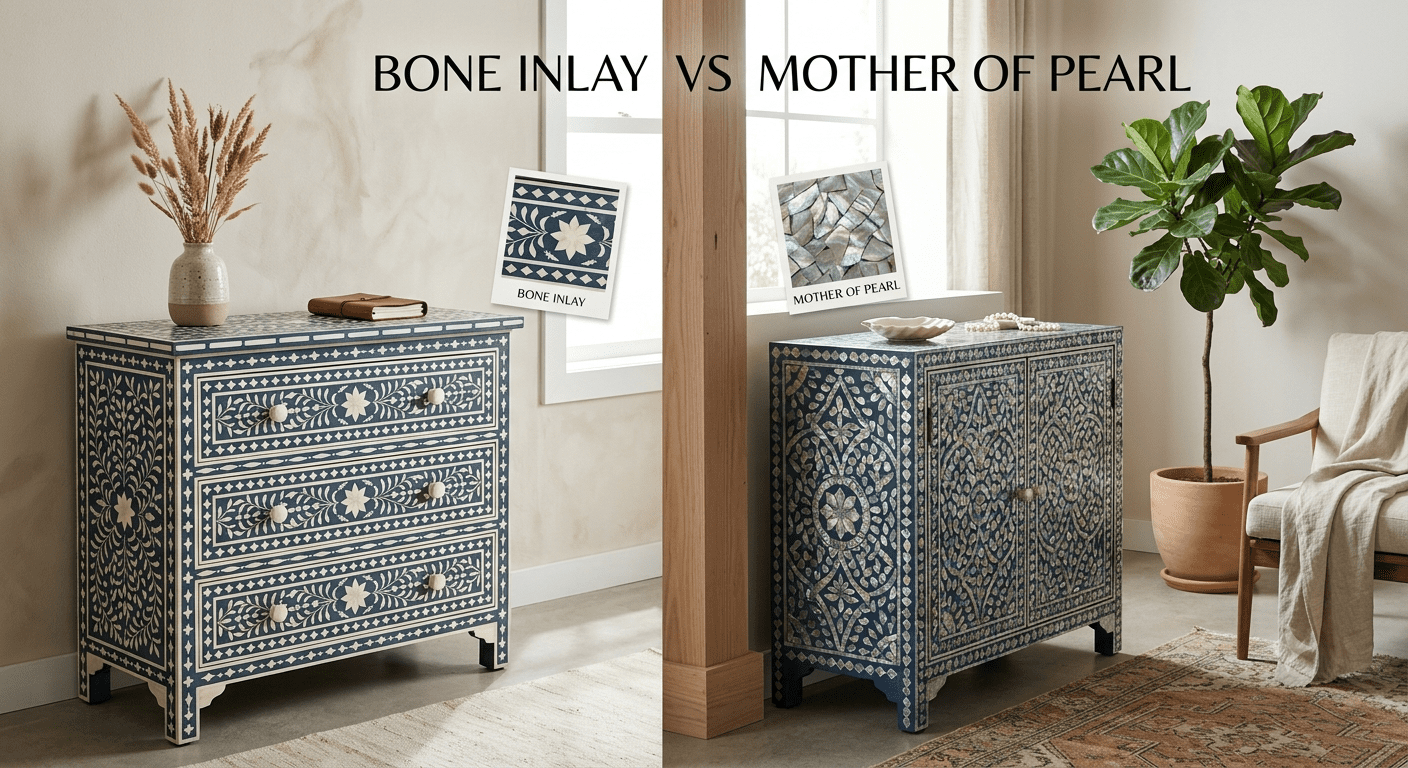
Walk into any high-end furniture showroom or scroll through the portfolio of a luxury interior designer, and you’ll likely encounter two names that appear side by side: bone inlay and mother of pearl. Both are traditional Rajasthani craft techniques. Both produce furniture of extraordinary visual complexity and artisan quality. But they are not the same — and the differences matter when you’re choosing a piece that will anchor a room for years to come.
This guide breaks down exactly how bone inlay and mother of pearl differ in material, appearance, light behaviour, care, and ideal use cases — so you can choose confidently.
What Is Bone Inlay?
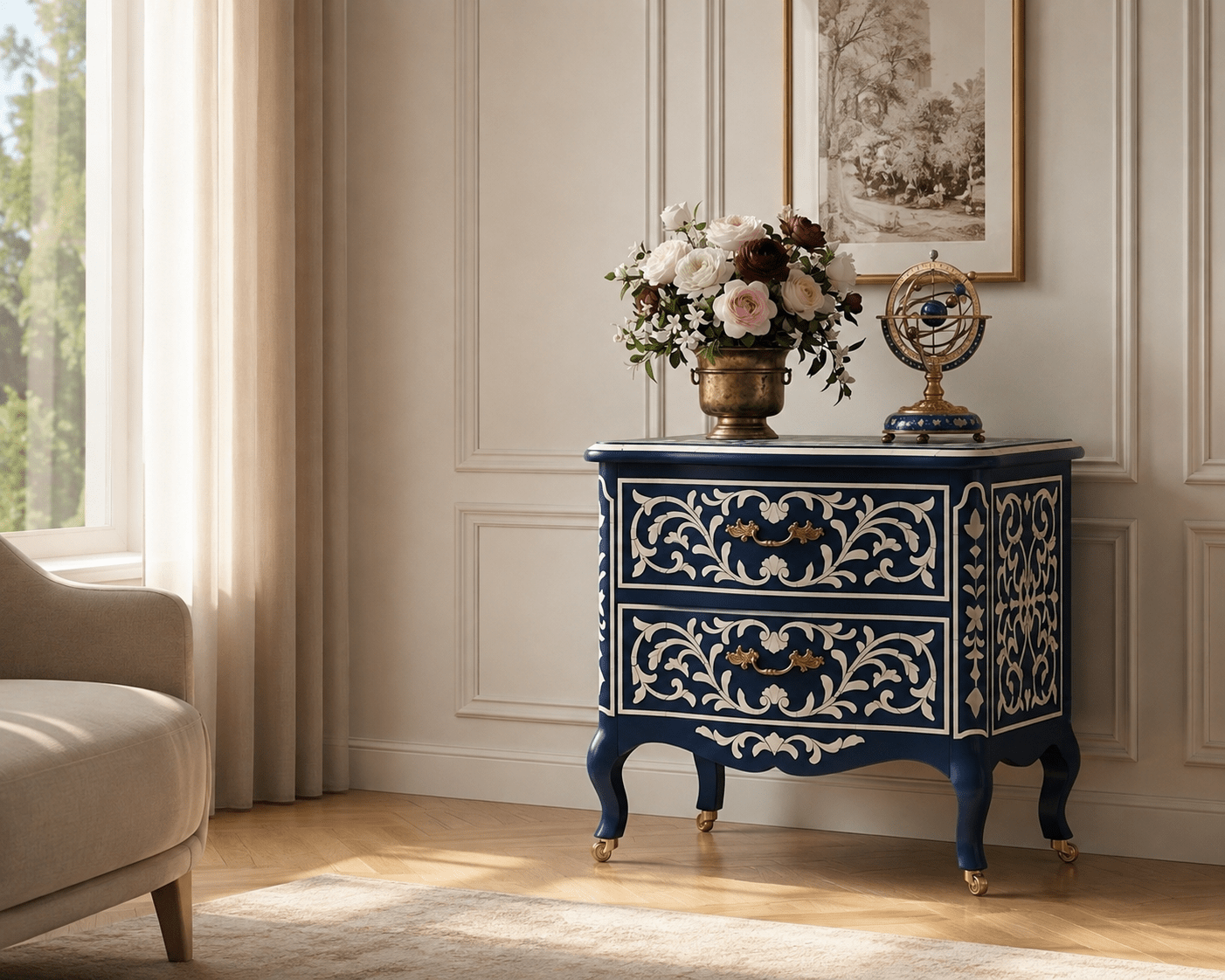
Bone inlay furniture is made by hand-setting hundreds or thousands of small cut pieces of animal bone — most commonly camel bone or buffalo bone — into carved channels in a mango wood base. The gaps between bone pieces are filled with coloured resin, which provides the background tone of the pattern. The entire surface is then sanded flat and sealed. The result is a piece with a strong, graphic, high-contrast pattern in a matte, opaque finish. Read the full bone inlay guide →
What Is Mother of Pearl Inlay?
Mother of pearl inlay uses the same fundamental technique — pieces of material are hand-cut and set into carved channels in a wood base — but the material is entirely different. Mother of pearl (also called nacre) is cut from the inner shell layer of oysters and other molluscs.
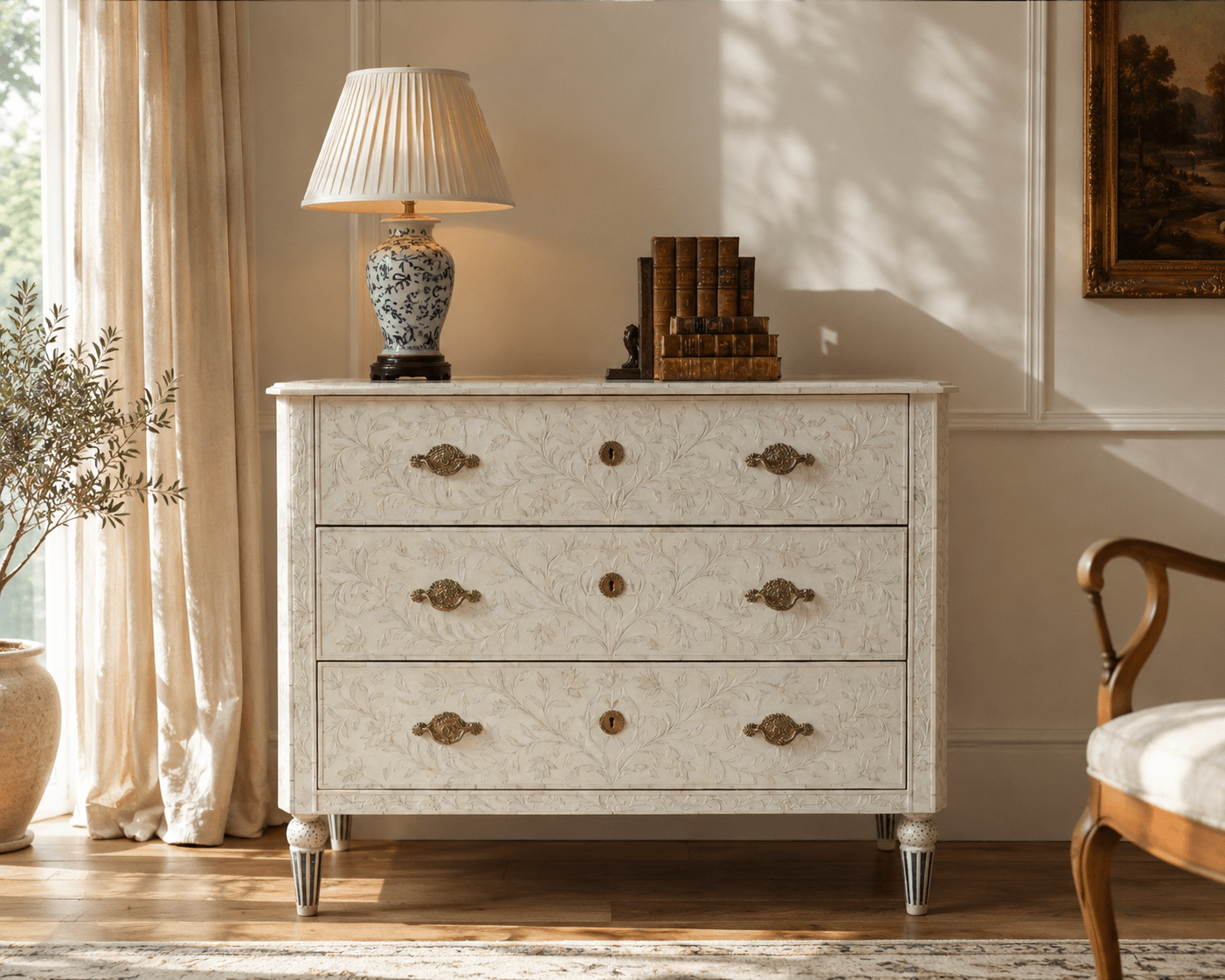
Unlike bone, which has a consistent matte-white appearance, mother of pearl is iridescent. Its surface contains microscopic layers of aragonite crystals that refract light and produce a shifting, rainbow-like shimmer. The visual effect changes with the angle and quality of light in the room — a characteristic that makes mother of pearl inlay feel alive in a way that is difficult to replicate with any other material.
Key Differences at a Glance
Material
- Bone inlay → Animal bone (camel, buffalo)
- Mother of pearl → Oyster or mollusc shell (nacre)
Finish
- Bone inlay → Matte, opaque, solid white
- Mother of pearl → Lustrous, iridescent, light-reactive
Background Colour
- Bone inlay → Any resin colour (navy, black, blush, white, green, etc.)
- Mother of pearl → Usually white, cream, or very soft tones
Ideal Rooms
- Bone inlay → Living rooms, hallways, bedrooms, bars
- Mother of pearl → Bedrooms, dressing rooms, hotel lobbies, dining rooms
How Light Behaves Differently on Each Material
This is perhaps the most important distinction for interior designers and buyers with strong lighting concepts in mind.
Bone inlay is largely light-indifferent. The contrast between the white bone and the coloured resin reads equally strongly whether the room is naturally lit or artificially lit. A navy-and-white bone inlay console table looks striking in afternoon sunlight or under a single pendant lamp.
Mother of pearl, by contrast, is light-dependent in the most beautiful way possible. In natural daylight, it catches and scatters the full colour spectrum. Under warm ambient lighting, it glows softly. In rooms with changing light conditions — east-facing bedrooms, open-plan living spaces — a mother of pearl piece offers a perpetually shifting visual reward.
Which Should You Choose?
Choose bone inlay if…
- You want a bold, high-contrast statement piece
- Your interior palette includes strong colours (navy, black, emerald, mustard)
- The piece will be in a room with mixed or artificial lighting
- You’re drawn to graphic, structured patterns
- You want a wide choice of background colours
Choose mother of pearl if…
- You want a luminous, light-catching focal point
- Your interior is soft, neutral, or predominantly white and cream
- The room receives good natural light
- You want a sense of movement and life in the surface finish
- The piece is for a bedroom, dressing room, or spa-like bathroom
Can You Mix Both in the Same Space?
Yes — and many top interior designers do exactly this. The two materials share the same craft heritage and often the same geometric vocabulary, which means they sit naturally together. A common approach is to use bone inlay for larger, more structural pieces (chest of drawers, console table, bar cabinet) and mother of pearl for accent pieces (mirror frames, bedside tables, decorative trays).
VikisArts produces both materials across its full furniture range, making it easy to mix and match within a single collection. Explore mother of pearl furniture →
Caring for Both Materials
Both bone inlay and mother of pearl require similar basic care. Use a soft, dry or slightly damp cloth for day-to-day cleaning. Avoid abrasive cloths or chemical sprays, which can strip the lacquer and damage the inlay surface. Both materials benefit from being kept out of direct sunlight for prolonged periods. Spills should be wiped immediately with a soft cloth.
Price: Is There a Difference?
Both techniques are equally labour-intensive. The cost of mother of pearl shell tends to be slightly higher than bone, which means mother of pearl pieces may carry a marginally higher price point. However, the primary driver of cost in both cases is the size and complexity of the piece rather than the material itself.
Frequently Asked Questions
Is mother of pearl more delicate than bone inlay?
Which material is more traditional?
Both bone inlay and mother of pearl inlay are traditional Rajasthani techniques with centuries of history. Bone inlay was historically more common in furniture; mother of pearl was often used in jewellery boxes and smaller decorative objects before both techniques merged in the furniture craft tradition.
Does mother of pearl yellow with age?
: High-quality mother of pearl, properly sealed, maintains its lustre for many years. Some darkening can occur in very old pieces or those exposed to strong ultraviolet light over long periods. VikisArts pieces are sealed to minimise this.
Can I get the same pattern in both bone inlay and mother of pearl?
Yes. VikisArts offers many of its geometric and floral patterns in both materials, allowing you to choose your preferred finish while keeping a consistent pattern across different pieces.
Which is better for a hotel or commercial space?
Both work well commercially. Bone inlay’s bold graphic patterns have stronger visual impact in larger spaces like hotel lobbies. Mother of pearl works particularly well in boutique hotel rooms and spa environments where a sense of luxurious calm is the design goal.
Add a review
Your email address will not be published. Required fields are marked *