



Bone Inlay Furniture & Mother of Pearl Furniture: The Complete Buying Guide
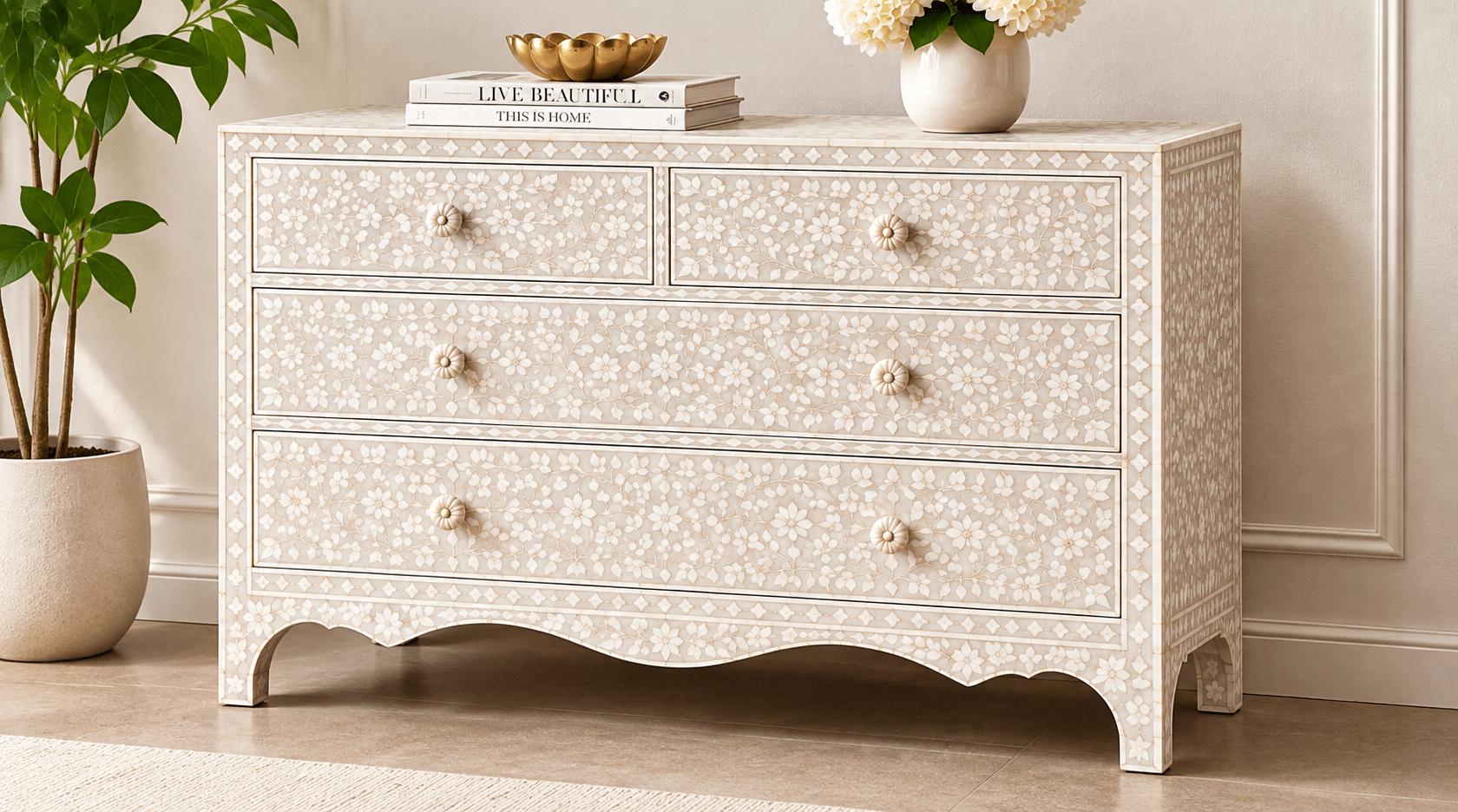
Walk into a room with a genuine bone inlay cabinet or a mother of pearl console table, and you feel it before you can explain it. The light catches on hundreds of hand-cut tiles. No two pieces are quite the same. There’s a story in every seam.
That’s the pull of bone inlay furniture and mother of pearl furniture two of India’s oldest decorative crafts, still practiced today almost exactly as they were centuries ago in the royal workshops of Rajasthan.
If you’re a homeowner furnishing a statement room, an interior designer sourcing a signature piece, a hotel group building a distinctive guest experience, or a wholesaler looking for a reliable manufacturing partner, this guide is for you. We’ll walk through what these crafts actually are, how they’re made by hand, how to tell real inlay from imitation, how to buy with confidence, and how to keep a piece looking beautiful for decades.
By the end, you’ll know exactly what separates a true handmade bone inlay furniture India piece from a factory knockoff and why so many designers keep coming back to it.
What Is Bone Inlay Furniture?
Bone inlay furniture is a decorative technique in which small, individually shaped pieces of polished bone are hand-set into a wooden frame to create intricate patterns florals, geometrics, herringbone, chevron, and more.
The bone itself is typically camel bone, cut into thin strips, bleached, and cut into tiny tiles by hand. Each tile is then set into a groove carved into the wood, sealed with resin, and sanded flush so the surface feels perfectly smooth despite being made of hundreds – sometimes thousands – of separate pieces.
The result is furniture with genuine texture and depth: a cabinet, a chest of drawers, or a coffee table that looks carved from a single ornate material but is actually a mosaic built one tile at a time.
Common pieces made with this technique include:
- Bone inlay coffee tables
- Bone inlay chest of drawers
- Bone inlay sideboards
- Bone inlay console tables
- Bone inlay bedside tables
- Bone inlay mirror frames
- Bone inlay dining tables
- Bone inlay cabinets and bar cabinets
What Is Mother of Pearl Furniture?
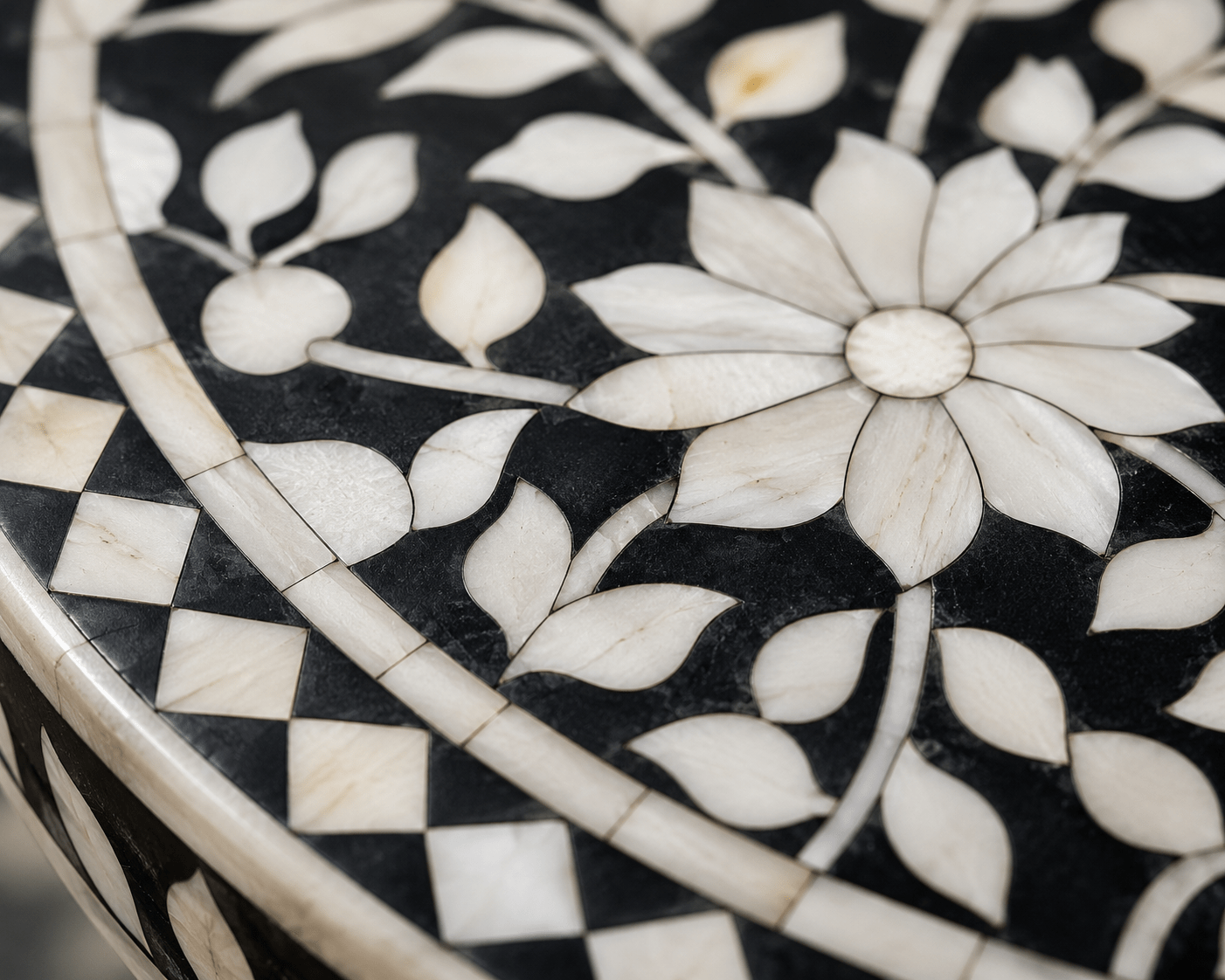
Mother of pearl furniture uses the same inlay principle, but with a different material: the iridescent inner lining of shells, most often from freshwater mussels or sea shells. Where bone inlay has a soft, matte, ivory-like finish, mother of pearl brings a shimmering, opalescent quality that shifts color as the light moves across it.
Artisans cut the shell into thin sheets, shape each piece by hand, and inlay it into wood in patterns ranging from delicate floral motifs to bold geometric repeats. Because natural shell has subtle color variation, every finished piece has its own unique shimmer.
Popular mother of pearl pieces include:
- Mother of pearl cabinets
- Mother of pearl console tables
- Mother of pearl mirror frames
- Mother of pearl bedside tables
- Mother of pearl chest of drawers
Many buyers looking for mother of pearl inlay decor choose smaller accent pieces first – a mirror frame or a bedside table-before committing to a larger statement piece like a buffet table or cabinet.
A Brief History of Bone Inlay Furniture in India
Inlay craftsmanship in India has roots that trace back to Mughal-era decorative arts, when artisans across Rajasthan and neighboring regions developed techniques for setting bone, ivory substitutes, and semi-precious materials into wood and stone. Over generations, the craft settled into family workshops, passed down from parent to child, refined but never mechanized.
Udaipur, in particular, became known as a center for this kind of detailed inlay work, thanks to a concentration of skilled artisan families who kept the tradition alive even as furniture manufacturing elsewhere moved toward mass production.
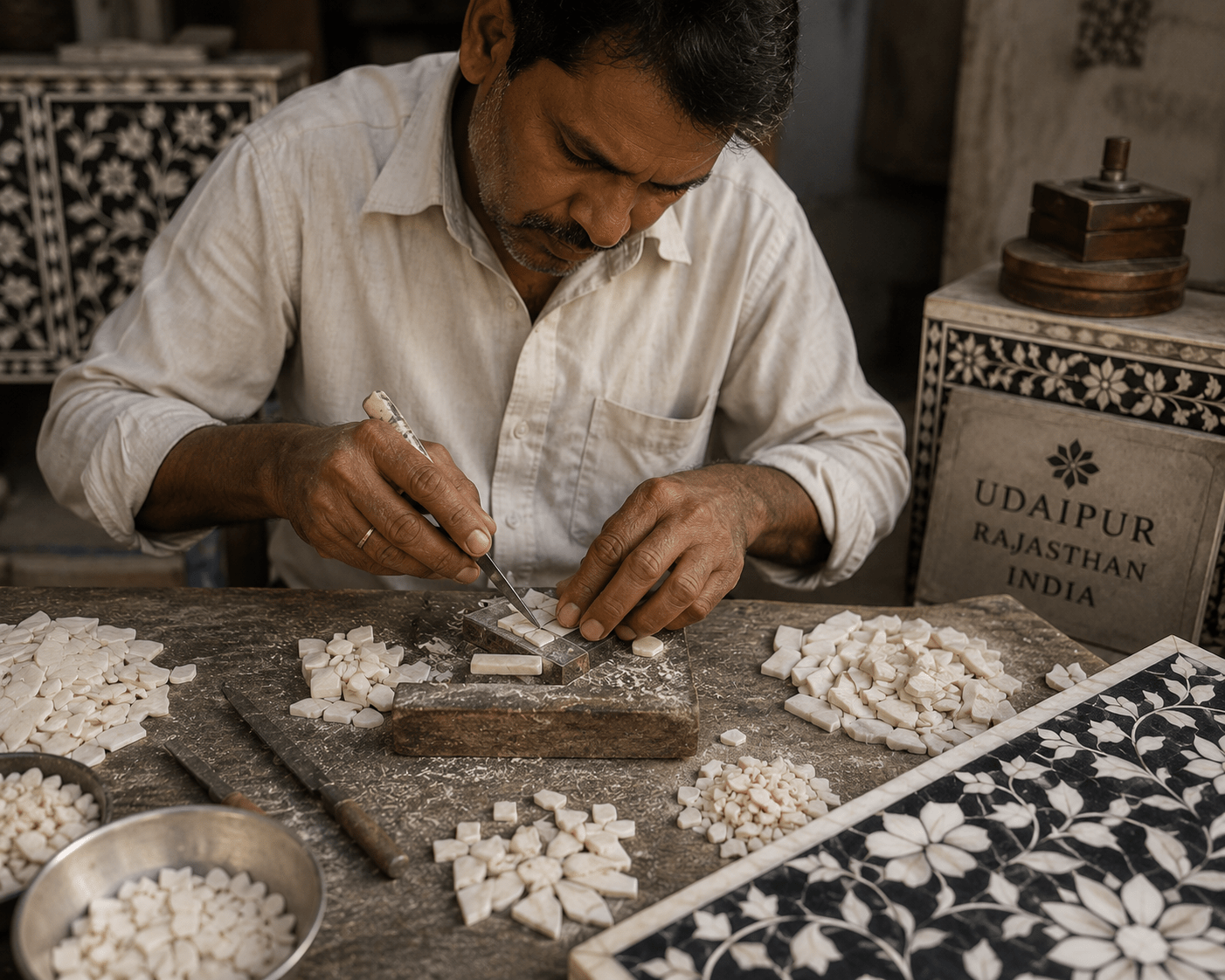
Today, that same lineage of craftsmanship continues. At Vikis Arts, our workshop is based in Udaipur, Rajasthan, where artisans who inherited these techniques from earlier generations still cut, shape, and set every tile by hand-no assembly lines, no shortcuts.
How Bone Inlay Furniture Is Made
Making a single bone inlay piece is a slow, deliberate process. Here’s a simplified walkthrough of the main stages:
- Frame construction. The wooden base of the furniture, a cabinet, table, or drawer front, is built first, usually from mango wood or another dense hardwood that can hold fine detail.
- Pattern design. The artisan sketches or transfers the inlay pattern onto the wood surface, planning how each tile will fit into the overall design.
- Bone preparation. Camel bone is cleaned, bleached, and cut into thin strips, then shaped into the small tile forms the pattern calls for.
- Grooving. Fine channels are carved into the wood by hand, following the pattern lines exactly.
- Setting the tiles. Each bone tile is placed into its groove and set with a natural resin adhesive, a painstaking, tile-by-tile process that can take days for a single piece.
- Sanding and leveling. Once set, the surface is sanded down repeatedly until the bone sits perfectly flush with the wood, leaving a smooth, seamless finish.
- Coloring and lacquering. Many designs incorporate colored lacquer or paint in the background areas around the bone tiles, followed by multiple coats of protective lacquer.
- Final polishing. The piece is polished by hand to bring out the shine and depth of the inlay work.
A single medium-sized piece, like a bedside table, can take several days of hands-on work from start to finish, which is part of why authentic bone inlay furniture carries a different kind of value than anything mass-produced.
How Mother of Pearl Furniture Is Made
Mother of pearl inlay follows a similar overall process, with a few key differences in material handling:
- Shell cutting. Raw shell is cut into thin, workable sheets—a delicate process, since shell is brittle and can crack under pressure.
- Shaping. Each piece is cut into the exact shape the pattern requires, often smaller and more delicate than bone tiles.
- Setting. Like bone inlay, shell pieces are set into hand-carved grooves in the wood and secured with resin.
- Finishing. Because mother-of-pearl is naturally reflective, the finishing stage focuses on preserving that shine—light sanding and careful lacquering to avoid dulling the shell’s natural iridescence.
The result is furniture that seems to change character depending on the light in the room — bright and shimmering in daylight, softer and more subtle in the evening.
Different Types of Bone Inlay Furniture
| Furniture Type | Best Used For | Typical Room |
|---|---|---|
| Bone Inlay Coffee Table | Statement centerpiece | Living room |
| Bone Inlay Chest of Drawers | Storage with visual impact | Bedroom |
| Bone Inlay Console Table | Entryway or hallway accent | Foyer, hallway |
| Bone Inlay Sideboard | Dining storage & display | Dining room |
| Bone Inlay Bedside Table | Bedroom pair pieces | Bedroom |
| Bone Inlay Mirror Frame | Wall decor & light reflection | Any room |
| Bone Inlay Bar Cabinet | Entertaining feature piece | Living room, lounge |
| Bone Inlay Dining Table | Formal dining statement | Dining room |
Different Types of Mother of Pearl Furniture
- Mother of Pearl Cabinets — ideal as a striking storage piece in a living or dining room
- Mother of Pearl Console Tables — a popular choice for hallways and entryways
- Mother of Pearl Mirror Frames — a smaller-scale way to introduce the shimmer of shell inlay
- Mother of Pearl Bedside Tables — often paired for symmetry in a primary bedroom
- Mother of Pearl Bar Cabinets — a favorite for hospitality and lounge spaces
- Mother of Pearl Chest of Drawers — combines storage with a jewel-like finish
Popular Bone Inlay Furniture Designs
Certain motifs come up again and again across bone inlay collections, each with its own character:
- Floral patterns — soft, romantic, and well suited to traditional or eclectic interiors
- Geometric repeats — diamonds, chevrons, and herringbone for a more modern look
- Sunburst and medallion motifs — a bold centerpiece pattern, often used on round coffee tables and mirror frames
- Two-tone color combinations — black-and-white, navy-and-cream, or green-and-ivory pairings that let the inlay pattern read clearly from across a room
Why Choose Handmade Bone Inlay Furniture India
Sourcing handmade bone inlay furniture in India directly, rather than buying through a generic import retailer, comes with real advantages:
- Direct artisan pricing: fewer middlemen between the workshop and your home
- Genuine craftsmanship pieces made by artisans with generational experience in the technique, not factory workers assembling a kit
- Customization access: Direct manufacturers can usually accommodate custom sizes, colors, and patterns; import retailers often can’t
- Traceable origin: You know exactly where and how the piece was made
- Better long-term relationships for trade buyers: working directly with a manufacturer like Vikis Arts means consistent quality across repeat orders
Bone Inlay vs. Mother of Pearl Furniture: What’s the Difference?
| Feature | Bone Inlay | Mother of Pearl |
|---|---|---|
| Material | Polished camel bone | Natural shell (mussel/sea shell) |
| Visual finish | Soft, matte, ivory-toned | Iridescent, shimmering, color-shifting |
| Best light | Looks rich in both natural & warm lighting | Most striking in natural daylight |
| Typical mood | Classic, warm, textural | Glamorous, jewel-toned, statement-making |
| Durability | Very durable, dense material | Durable but slightly more delicate to cut |
| Price range | Generally more accessible | Often a premium over bone inlay |
| Popular pieces | Coffee tables, chests, sideboards | Mirror frames, bedside tables, cabinets |
Neither is objectively “”better” the right choice depends on the mood you’re building. Many designers use both techniques within the same home: bone inlay for larger, everyday pieces, and mother of pearl for a jewel-box accent piece that catches the eye.
Bone Inlay Furniture vs. Machine-Made Furniture
| Factor | Handmade Bone Inlay | Machine-Made / Mass-Produced |
|---|---|---|
| Production time | Days per piece | Minutes to hours per piece |
| Uniqueness | Every piece slightly different | Identical units |
| Material | Genuine bone, hand-cut | Often printed patterns or veneer |
| Longevity | Built to last decades | Varies, often shorter lifespan |
| Repair potential | Can be restored by artisans | Often not repairable |
| Environmental footprint | Low-waste, small-batch | Higher-volume production |
| Price | Higher upfront cost | Lower upfront cost |
Machine-made “bone inlay style” furniture does exist, usually with printed patterns or thin veneer overlays designed to mimic the look. It’s cheaper, but it doesn’t age the same way, and it can’t be restored the way genuine hand-set inlay can.
Add a review
Your email address will not be published. Required fields are marked *